Keepsake or Souvenir: Two Different Jobs for a Memento
Keepsake or souvenir? Learn why a memento can feel distant or meaningful, and choose an object that suits the memory you want it to carry.
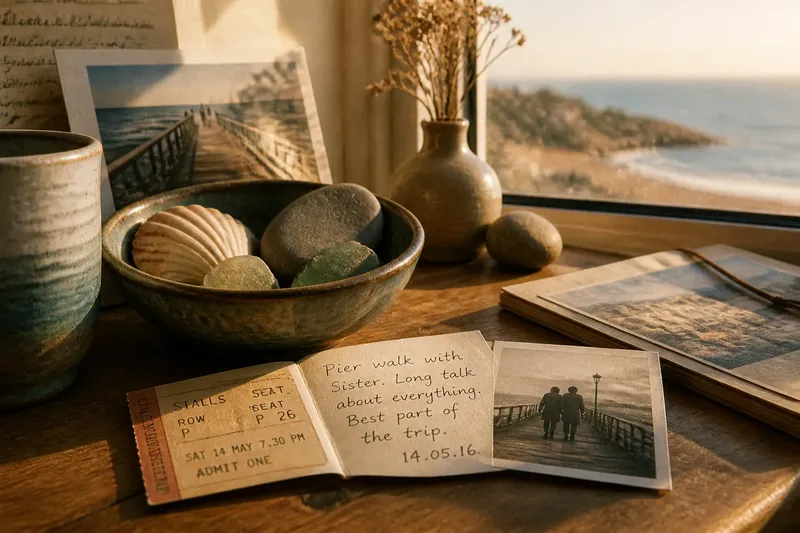
A shell sits on the windowsill beside a ticket stub, and neither seems to say much until someone asks where it came from. The shell may mark a day at the coast; the ticket may bring back the friend who kept it. The difference between a keepsake and a souvenir is often the job each object is asked to do.
A souvenir commonly points to a place, visit or occasion. A keepsake is valued for its particular connection to a person, relationship or episode. The categories can overlap, but confusion arises when we expect an object to carry a kind of meaning it was never chosen to hold.
Why does a souvenir feel like a keepsake?
A souvenir can become deeply personal, but its first purpose is often to mark an experience: a postcard from a city, a programme from a concert, or a small craft bought on a trip. It helps locate a memory in a shared setting. A keepsake, by contrast, may have little obvious connection to a place. A worn button from a relative’s coat can matter because of who wore it, not because it represents a destination.
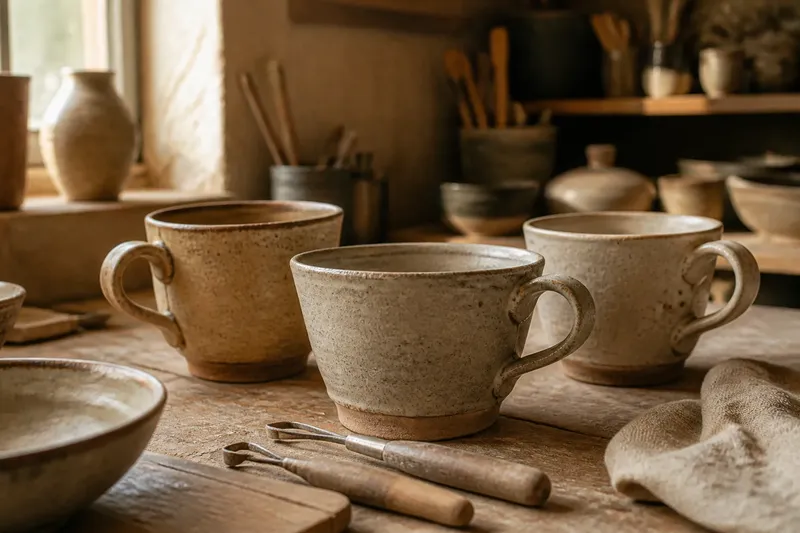
The distinction is about emphasis, not worth. A ceramic cup bought during a journey might recall the town where it was made and the companion who chose it. If both associations matter, the object is doing both jobs. There is no need to force it into one category.
Think of the object as a key: a souvenir may open a door onto a place, while a keepsake may open onto a relationship. Sometimes one key fits both locks; sometimes it does not.
What if the object feels oddly impersonal?
This often happens when an item represents a broad event but has no detail that belongs specifically to the person remembering it. A generic magnet can recall a holiday in name, yet bring back little beyond the fact of having travelled. That does not make it a poor choice; it may simply be a marker, not a vessel for a detailed personal memory.
Try attaching a small, accurate context rather than demanding more feeling from the object. A brief note on the back of a photograph, a date on a ticket sleeve, or a place name beside a collected stone can connect the item to the moment it marks. Keep the note specific: who was there, what happened, or why this particular object came home.
Say you return from a day at the seaside with a smooth pebble that looks much like others. If the moment you want to keep is a conversation with your sister on the pier, write that down beside it. The pebble remains an ordinary souvenir, but its association now points to a particular shared memory. If the note feels forced, the memory may be better kept in words or photographs instead.
Why does a personal keepsake seem to matter less over time?
A keepsake can lose its immediate force when the story around it becomes harder to recall. This is especially likely with small, unexplained objects inherited or saved by someone else. Their importance may be real, but the link is not self-evident to the next person.
Try recording what is known, while leaving gaps honestly marked. A label might say, “From Aunt May’s sewing box; she used it to mend coats,” if that is what the family knows. Avoid turning a guess into family fact. The object can retain its place without requiring a complete story.
There is also no duty to feel the same attachment as the person who passed an object on. You might keep it because it belongs to a family history, ask a relative about it, or decide that a photograph and a short account are enough. Choosing a form that suits your relationship to the memory is not a rejection of the person.
How do you choose the right role for a memento?
Before buying, keeping or giving an object, ask what you want it to recall. The answers often make the choice clearer:
- Is the place or occasion the main point? A map, postcard, programme or locally made object may work well as a souvenir.
- Is a particular person or exchange central? A handwritten note, shared photograph or object used together may serve better as a keepsake.
- Will the object make sense without an explanation? If not, add a short caption or keep the story with it.
- Would a photograph preserve the meaning just as well? This can help when an item is fragile, bulky or difficult to store.
- Do you want to display it, use it or keep it private? Choose a form that fits the role rather than buying something merely because it is sold as a memento.
These questions are not a test of sentiment. They help separate the memory you want from the object’s appearance, price or customary role as a holiday purchase. A souvenir need not be useful, and a keepsake need not look distinctive.
Which questions help settle the difference?
Can one object be both a keepsake and a souvenir?
Yes. A small bowl bought on a trip can represent the place and the friend who chose it with you. Its meaning can shift depending on which part of the memory comes to mind.
Does a souvenir have to come from a trip?
No. A ticket from a local performance or a ribbon from a community event can mark an occasion. What matters is its role as a sign of having been somewhere or taken part.
Can an ordinary object become a keepsake?
Yes, when a personal association gives it meaning. A plain envelope may matter because it carried news from someone important, even if its original function was unremarkable.
What should I do with a memento whose story is unclear?
Keep only what you have reason to value, and record any reliable context you can learn. If the object itself does not matter to you, a photograph or a family note may preserve the known part of its story.
What if the memory matters more than the object?
Let the object be a prompt, not a container expected to preserve everything. A souvenir can mark where a day happened; a keepsake can call up someone’s presence; neither needs to hold every detail. When choosing between them, ask whether you want to remember a place, a person, or the connection between the two. That answer is a more dependable guide than the label on a shop shelf.